.png)
 12 Kerbau Road. Singapore 219151
  69500029
.jpeg)
.jpeg)
Dental Implants: A Clinical Overview
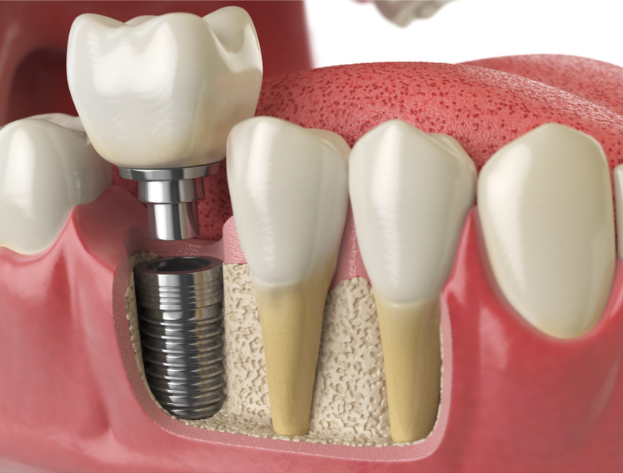
Dental implants are a way to replace missing teeth. A dental implant is a titanium or zirconia post that is surgically placed into the jawbone to act as an artificial tooth root. When the implant heals properly it provides a base for a fake tooth, bridge or denture. Unlike bridges, implants don't rely on adjacent teeth and help preserve the jawbone. because they help keep the jawbone healthy, do not hurt adjacent teeth and maintain a healthy appearance for a long time.
Little India Dentist has been providing dental implant treatments to patients for many years, combining technology with a family-centred approach to compassionate, patient-focused care.
Types of Dental Implants

By Structural Design
| Type | Description | Indication |
|---|---|---|
| Endosteal Implants | Screw-, cylinder-, or blade-shaped fixtures placed directly within the jawbone | Standard of care for patients with adequate bone volume and density |
| Subperiosteal Implants | A custom metal framework positioned beneath the periosteum, atop the jawbone | Patients with insufficient bone height who decline grafting procedures |
| Zygomatic Implants | Extended-length fixtures anchored in the zygomatic bone rather than the maxilla | Cases of severe maxillary bone resorption |
Dental Implants Procedure
Single-Unit Implant: A prosthetic tooth is supported by a single implant.
Implant-Supported Fixed Bridge: A fixed bridge that replaces lost teeth is supported by many implants.
Full-Arch Rehabilitation (on-4/All-on-6): For those who have lost the majority of their teeth, a fixed arch is supported by four to six implants.
Implant-Retained Overdenture: This method stabilises a removable denture with two to four implants.
Common Procedure
Immediate Loading - A temporary or final fake tooth is placed after surgery if the implant is stable enough.
Delayed Loading - The implant is allowed to heal for a while before the fake tooth is placed.
Surgical and Restorative Procedure
1. Diagnostic Assessment: An assessment of the jawbone and surrounding tissues using X-rays and cone-beam CT images.
2. Pre-Prosthetic Preparation: To prepare the location, extract teeth that cannot be salvaged, add bone grafts, or carry out sinus lift treatments.
3. Implant Placement: If sedation is required, anaesthesia is used to insert the implant.
4. Osseointegration Phase: The implant integrates with the surrounding bone over the course of two to six months of healing.
5. Abutment Connection: During placement or as a separate minor procedure, a connection component is inserted.
6. Final Prosthetic Restoration: This is the last prosthetic tooth, bridge, or denture. delivered.
Postoperative Care
Immediate Postoperative Period (0-72 Hours)
* Apply pressure to the site to control bleeding.
* Eat cool foods and avoid suction-based eating or drinking.
* Avoid tobacco, alcohol and strenuous activities.
Early Healing Phase (1-2 Weeks)
* Brush around the surgical site and gradually introduce solid foods.
* Monitor for signs of infection. Report them to the doctor.
Long-Term Maintenance
*. Clean around the implant restoration twice a day.
* Visit the doctor regularly for check-ups and cleanings.
Dental Implants After Care
Interdental Cleaning
- Floss every day, preferably with unwaxed tape or implant-specific floss (a thicker, textured floss made to clean around the abutment).
- Water flossers, also known as oral irrigators, or interdental brushes are useful for removing debris from areas that are too wide for regular floss to reach, such as beneath bridges.
- The most prevalent location for plaque buildup and the beginning of peri-implantitis is the junction between the crown and gum tissue, therefore pay close attention to this area.
Antimicrobial Rinses
- Although long-term daily use of chlorhexidine is generally discouraged due to discolouration and taste modification, some dentists advise using an alcohol-free antibacterial or chlorhexidine mouthwash on occasion, especially in the early months.
Professional Maintenance
- Frequent checkups: For cleaning and implant evaluation, see your dentist every six months (or as recommended). Little India Dentist may help to clean your teeth on regular term basis.
- Monitoring particular to implants: Before peri-implantitis (bone loss surrounding the implant, which is considerably more difficult to correct) develops, dentists look for indications of peri-implant mucositis (early, reversible inflammation).
- X-rays: Regular radiographs monitor the amount of bone surrounding the implant to identify early bone loss before symptoms appear.
- Professional cleaning tools: To prevent scratching the titanium/zirconia surface, which could otherwise result in rough areas that harbour bacteria, dentists use implant-safe equipment (plastic or resin-coated scalers instead of metal).
Lifestyle Factors
| Factor | Impact | Recommendation |
|---|---|---|
| Smoking | Significantly reduces blood flow and healing capacity; one of the strongest risk factors for implant failure | Quit or at minimum avoid smoking during healing; ideally long-term |
| Diabetes | Poor glycemic control impairs healing and increases infection risk | Maintain good blood sugar control; coordinate with your physician |
| Bruxism (teeth grinding) | Excess mechanical load can loosen the implant or fracture the crown | Wear a custom night guard if diagnosed |
| Diet | Very hard or sticky foods (ice, hard candy, toffee) can crack crowns or stress the implant | Avoid biting directly into hard foods; cut them up instead |
| Alcohol | Excessive intake impairs healing and is linked to higher implant failure rates | Moderate consumption |
| General oral hygiene compliance |
The single largest controllable factor in long-term success | Consistent daily care + professional visits |
Warning Signs to Watch For
Get in touch with your dentist right away if you observe:
-
persistent bleeding, redness, or swelling surrounding the implant
- Increasing crown or implant looseness
- Bad taste or persistent foul breath that is specific to the implant site
- Discomfort or pain while biting
- Gum recession that is visible and exposes the implant surface
With better cleanliness and teeth cleaning, early intervention at the mucositis stage can be reversed; once bone loss (peri-implantitis) occurs, treatment becomes more difficult and success is less certain.
Special Considerations for Long-Term Success
Occlusal (bite) checks: Since unequal loading over time might harm the implant, your dentist should regularly ensure that bite forces are distributed evenly.
Screw/abutment maintenance: The internal screw that holds the crown to the implant may occasionally come loose; a "clicking" sound or slight movement calls for a dental appointment rather than a home adjustment.
Systemic health monitoring: Because they can impact the long-term integrity of the bone around the implant, conditions including osteoporosis, autoimmune illnesses, or new drugs (especially bisphosphonates) should be brought to the attention of your implant dentist.
Conclusion
Dental implants can last for a time up to 10 years, if patients take good care of them and follow maintenance recommendations. Contact our Little India Dentist for dental implants treatment today!